
The same property, twice
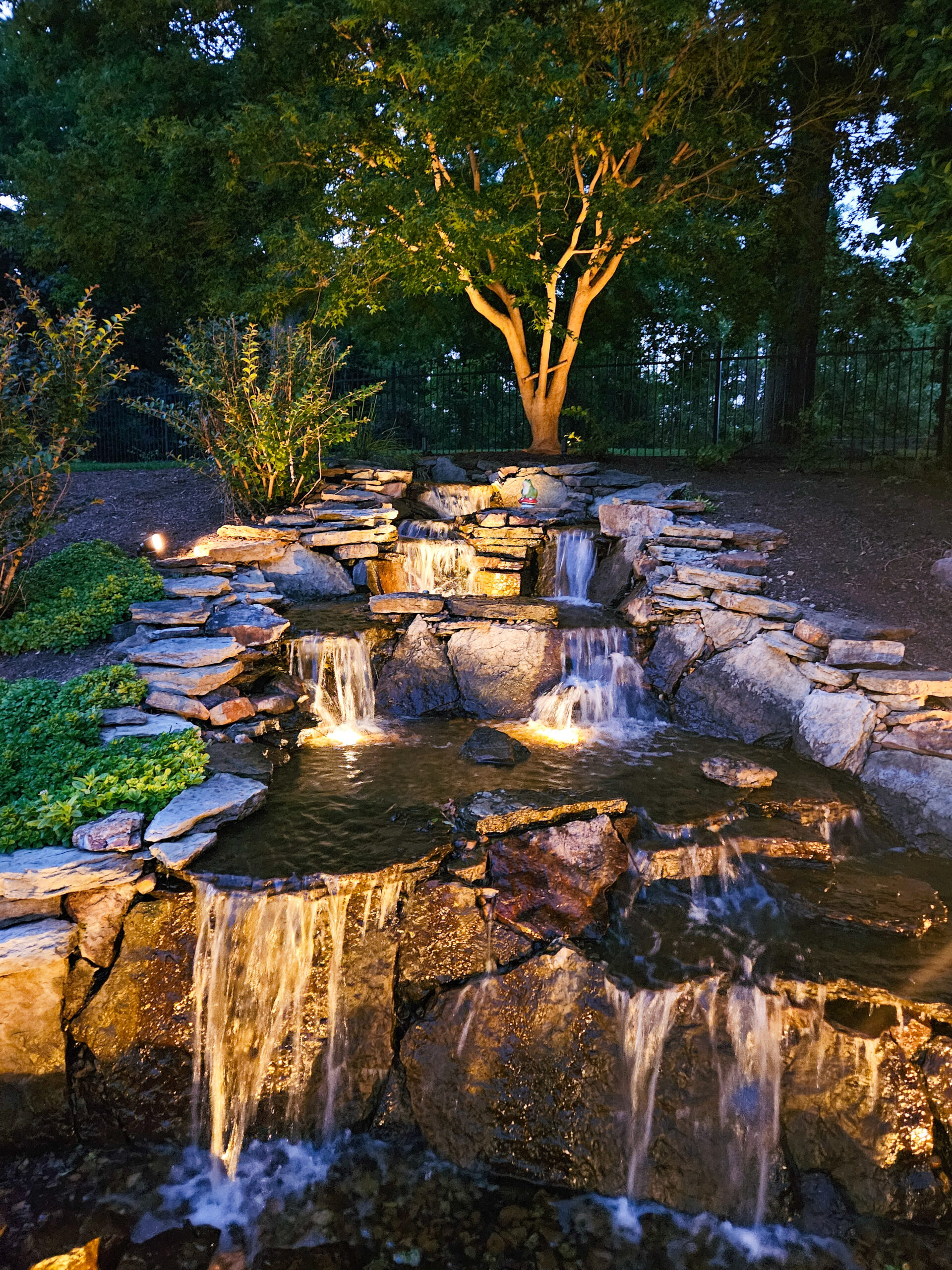
A landscape you have spent years on is invisible in the dark. Lit well, it is arguably better after dark than in daylight, because you choose what the eye goes to. The specimen maple reads. The blank stretch of fence does not.
That is the difference between professional outdoor lighting installation in St. Louis and a box of path lights from a big-box store. The kit gives you a runway of identical dots and a glare you look at instead of the garden. A designed system gives you layers, shadow, and steps you can see without a single fixture shining in anyone's eyes. Same yard, and the second version also happens to be the safer one.
Types of outdoor lighting
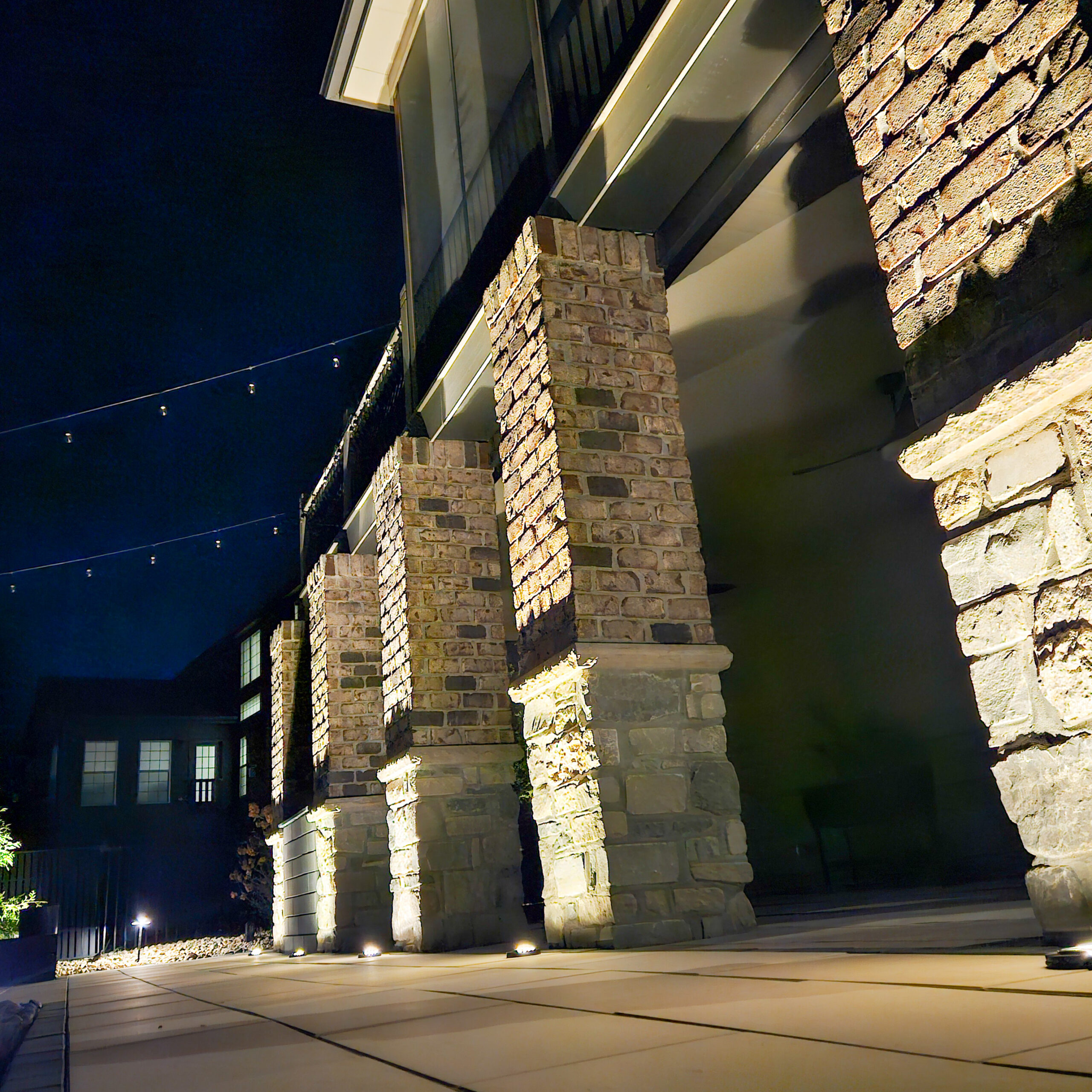
Almost every property we light uses four kinds of light doing four different jobs. Path and walkway lighting is the one people picture first, and the one most often overdone: you are lighting the ground people walk on, not the fixtures, so fewer and lower is usually better. Accent and uplighting is what gives the house presence, washing a stone facade or grazing a brick column so the texture shows.
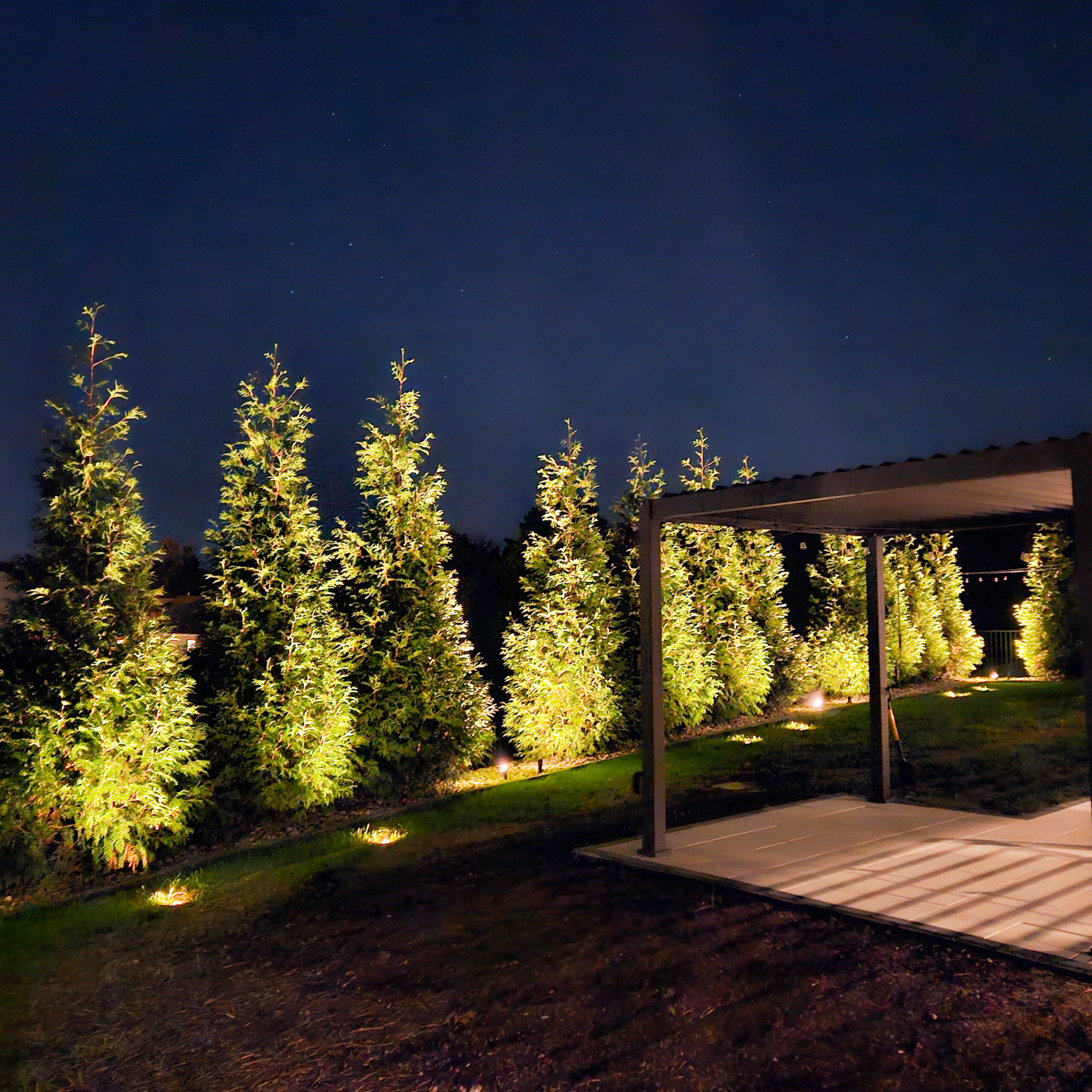
Landscape lighting in the beds and trees is where the artistry is. A mature oak lit from three sides reads as a canopy rather than a silhouette, and a low light behind ornamental grass turns it into the most interesting thing in the yard. And security lighting covers the dark corners, entries and side gates, with motion activation where you want a response rather than a permanent floodlight.
Path and Walkway
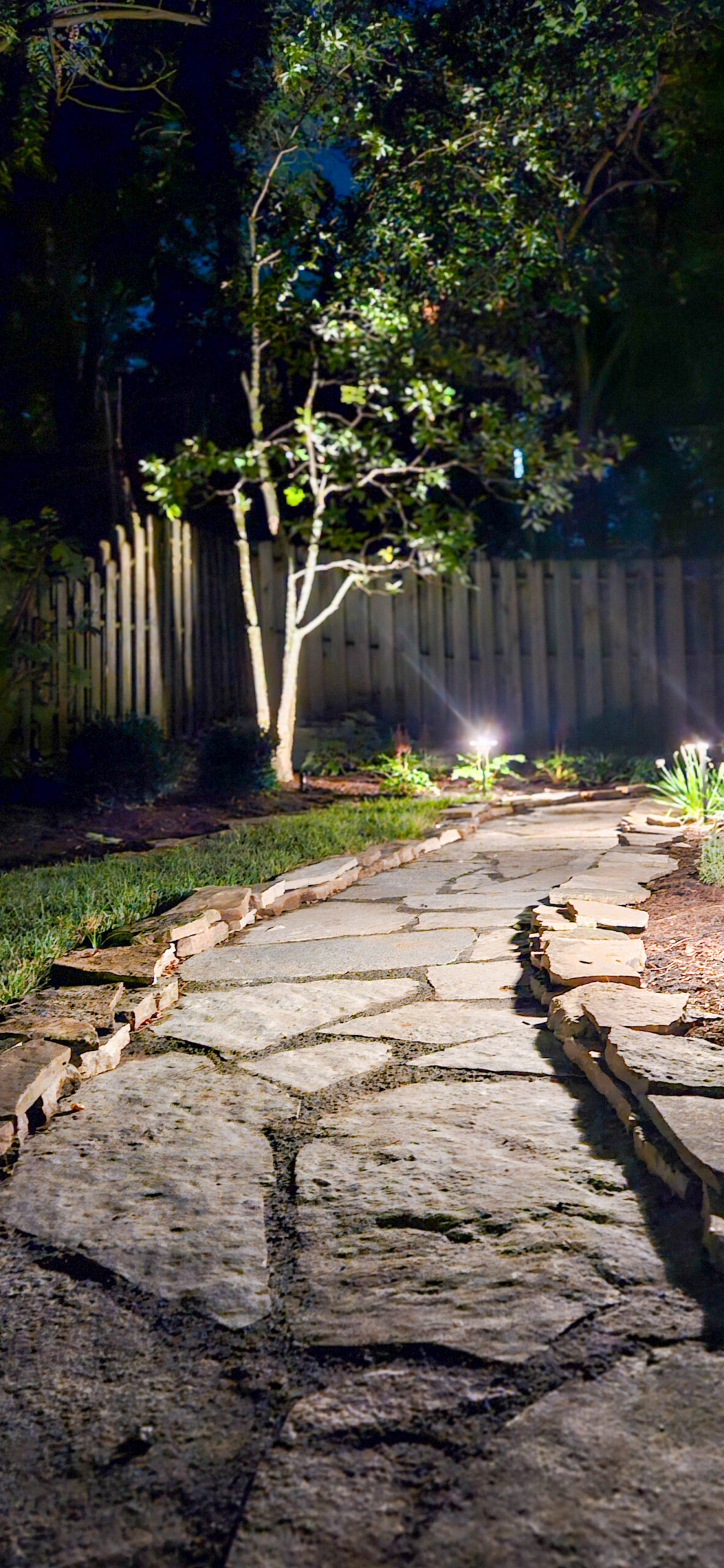
Enough to read the ground and the steps. No runway of identical dots.
Accent and Uplighting
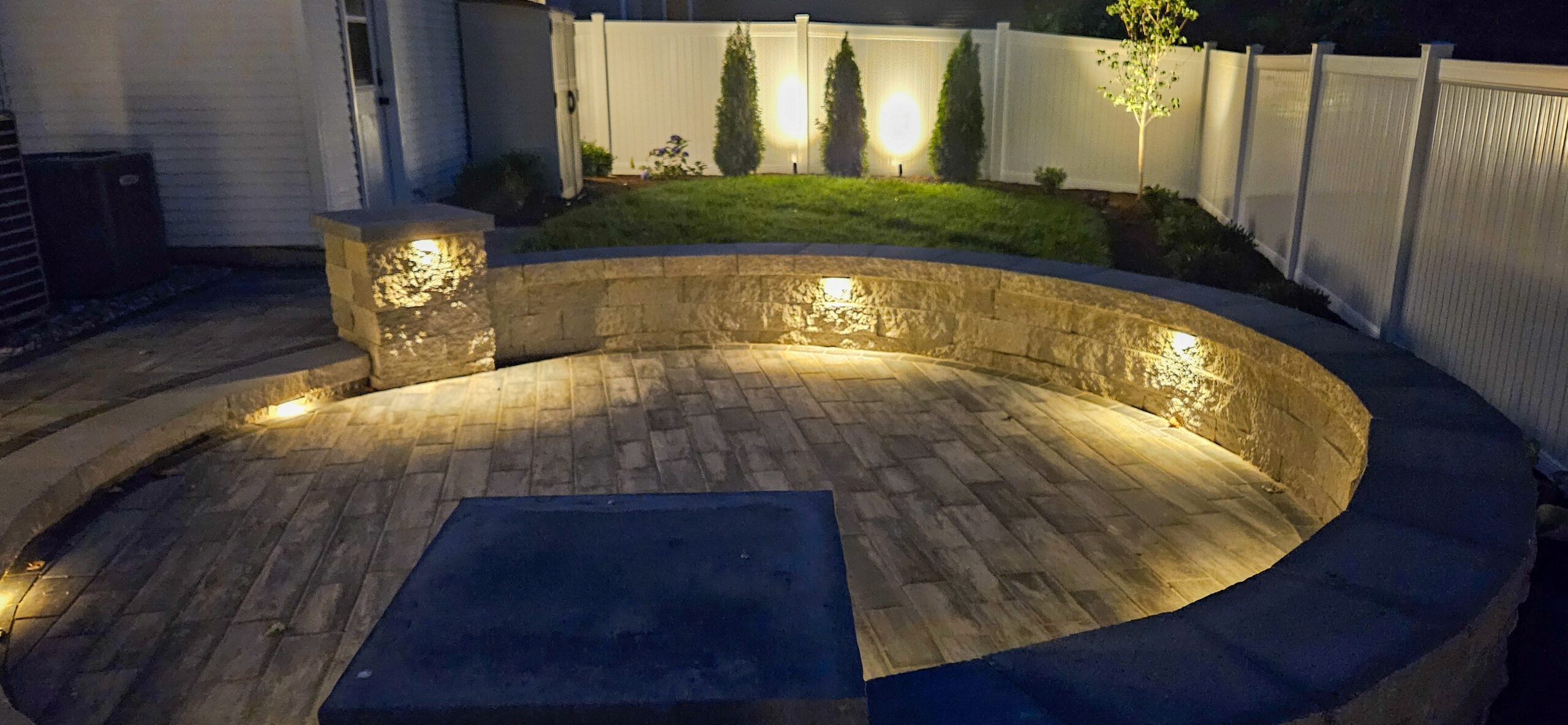
Architecture, stone and columns, lit so the material shows its texture.
Trees and Gardens
The specimen tree, the shape of the garden at night.
Security and Motion
Dark corners, entries and gates, on motion rather than on all night.
Good lighting is mostly about the dark parts
An amateur system lights everything evenly and the result is flat. A designed one leaves most of the property dark on purpose, because contrast is what makes the lit parts read. Four techniques do nearly all of the work.
Uplighting sets a fixture at the base of a tree or a wall and throws light up the form. Moonlighting does the opposite, mounting high in a canopy and dropping dappled light through the branches, which is the most natural-looking light in the whole toolkit. Grazing sits a fixture close to a textured surface so the shadows rake across it. Silhouetting lights the surface behind an object and leaves the object itself black.
None of that is decided from a catalog. It is decided standing in your yard after dark with test fixtures, looking at what your property actually has worth looking at.
Professional design approach
It starts with a walk of the property in daylight. We look at what deserves light, where you actually walk, which windows you look out of in the evening. Then we put the plan on paper as part of the whole picture of your outdoor living spaces rather than as a separate exercise.
Controls are as simple or as capable as you want: an astronomic timer that tracks dusk and dawn through the year so nothing needs resetting, app control from your phone, tunable white or color where it makes sense, and motion activation on the security zones.
Safety, security and curb appeal
Most clients come to us for how it looks and stay for the rest of it. Lighting is the only landscape element that does aesthetic and practical work at the same time.
Nobody trips on the steps
Grade changes, the edge of the drive, the step down to the patio. Guests find them without being told, which is the whole test.
No dark corners
A property with no shadowed approach is a harder property to walk up to unseen. That is worth more than one bright floodlight.
The house has presence
Curb appeal at night is almost entirely lighting. It is the cheapest change with the largest effect on how the house reads from the street.
The yard stays usable
Dinner on the patio in October ends when you can no longer see the table, not when the sun goes down.
Installation and integration
Most outdoor lighting installation projects in St. Louis are two to four days on site. Wire is buried at proper depth and routed around root zones rather than through them, connections are waterproof and made to last outdoors, and we work around what is already planted instead.
Then the part that matters most: we come back after dark to aim it. Every fixture gets adjusted by eye with you there, because a light that is two degrees off shines in a window instead of up a trunk, and no amount of planning settles that from a drawing. Once it is right we set the timer, walk you through the app, and leave you a plan of where everything is buried. Plants keep growing after we leave, which is why lighting maintenance exists as its own service.
What people ask before they start
Often, yes. Converting old halogen fixtures to LED, replacing a failed transformer, tracing a zone that has gone dark, or re-aiming a system that was never aimed properly. We will look and tell you honestly whether it is worth repairing or whether the wiring is at the end of its life.
Very little, which is the real change of the past decade. LED fixtures draw a small fraction of what halogen did, so a whole-property system on a timer is a minor line on a bill rather than something you think twice about switching on.
You can, and for a short walk it is a fine answer. What you do not get is the design, the fixtures surviving more than a few seasons, a transformer sized for the load, or aiming. The common outcome is an even line of glare down the path and a garden that is still dark.
Not if it is aimed and shielded properly. Good design points light at surfaces rather than across property lines, and uses less of it than people expect. We check the view from the street and from next door as part of aiming.
Yes, and a lot of clients do. We design the whole property first, then build it in phases, sizing the transformer and running the trunk lines for the finished plan. Adding zone three in two years is then an afternoon rather than a redo.
A fixture aimed at a shrub three years ago is now aimed at the inside of that shrub. Lighting drifts out of adjustment as a garden matures, which is exactly what the maintenance service is for, and it is the main reason systems stop looking good rather than anything failing.
Built at the same time, for less
Wire goes in before the stone does. If any of these are on your list, doing them together saves opening the same ground twice.
Town and Country · Frontenac · Clayton · Kirkwood · Ladue · Webster Groves · Chesterfield
And the surrounding St. Louis area. If you are not sure whether we come out your way, call and ask.
Lighting is the one system that needs a visit a year
Nothing else we build drifts the way lighting does, because the garden around it keeps growing. An annual visit is what keeps a system looking the way it did the week it went in. It is a separate service with its own page.
What a visit covers